Archive for the ‘Food-Wine-Love’ Category
Recently, Jancis Robinson reported in the Financial TImes on the work being done in wineries in Virginia– yes, Virginia– home state of our third and one of my personal favorite presidents, T-Jeff. One of the things that I find most fascinating about him is his contribution to the American love-hate relationship with French wine. Upon his return from France, the man was criticized for have adopted “French manners”. He was truly one of the first American Fancy Boys– 10 years ago you might have called him a metrosexual. Straight, but with an appreciation for the finer things. A significant portion of his household budget was dedicated to acquiring many fine European (and especially French) wines which he happily shared with others. Yes, he was also a farmer– but one given to experimentation to provide the best that was available to serve at his table. However, among his most notable agrarian failures was an inability to produce any decent wine in his native Virginia.
But what penmanship!
As the rebellious product of a catholic school education, I bristled at the notion that my cursive writing had to conform to the “Palmer Method” mandated by those sometimes sweet, oftentimes bitter nuns at Sacred Heart Cosmo-Demonic School. I do not believe that anyone will call upon me to document anything of importance in my own often incomprehensible scribblings. And while I may never approach T-Jeff’s eloquence and neatness with a pen, I can at least raise my glass, as he most assuredly did, to take in the bounty of the vineyards. Only today my task is easier since so many wines are available it can make one’s head spin. And I can do something T-Jeff did not live long enough to do– drink good Virginia wine.
But back to Jancis. She reported on one particular wine maker, Rutger de Vink, proprietor of the winery, RdV. Her enthusiasm for the wines got me intrigued enough that I ordered some to taste. RdV produces two wines from its 6.5 hectares vineyards planted with 40% Cabernet Sauvignon, 40% Merlot, 12% Petit Verdot and a bit of Cabernet Franc (8%). The high-end wine, called RdV, which, according to JR, “is uncannily like really top flight red bordeaux” and made for long aging. High praise from the doyenne of the wine press. Their second bottling, a play on Mr. de Vink’s initials, is called Rendezvous. It was the Rendezvous we opened last night. I should point out that at $88 and $55 per bottle, these are not wines I can or would open every night.
 RdV Vineyards Rendezvous 2008 ($55) 14.5% alc. In drinking this wine, I am of two minds. On the one hand, the wine showed complexity, evolution and longevity during the course of the evening as we sipped this over a 4 hour period. On the other hand, there were elements in the flavor profile that are not amongst my favorites. In the end, although showing considerable complexity, it is about taste, and we must recognize it for what it is–a good wine, verging on the very good. Initially, although the nose was not particularly big, I was impressed by rose petals, but those notes quickly dissipated and migrated to the darker side turning at points meat-like and smokey punctuated by some sweet spices. In the mouth, it exhibited a deep concentration generous with palate teasers that were, at turns, spicy, savory and bramble-like. Moving to the long finish filled with espresso notes, I found some grippy tannins that were stronger than the acidity. In some respects, this reminded me of the Ruffino Modus (a Super Tuscan of which I am not a great fan), but this has much greater finesse. Would another 5+ years in the bottle help this. My gut says yes. Make no mistake, this is a food wine through and through. Is it good value? Better values abound in this price range. Still there is enough to say about this wine, that I would like to see what these guys do in future vintages. Rated ** 1/2
Like what you see? Hit the Subscribe/Follow button and don’t miss another Sybarite Sauvage post.
Not all of us who love fine wine are so fortunate to have come to it early in our lives. We don’t have the advantage of having it presented as part of our everyday cultural experience. We don’t get to grow up amongst the vines, with the vineyard as our playground. But many of us, who come to love wine, have had that seminal moment when wine begins to reveal itself to us in a oenological strip-tease of sorts. Starting with sweeter wines, usually. My first memory of wine, for example, came as a child at Christmas time when my grandmother, who was never really a drinker, would down a small tumbler of Manischewitz concord grape wine while preparing Christmas dinner. Don’t ask what a nice devout Roman Catholic lady was doing drinking a Kosher wine at Christmas– I have no idea how that started. What I can tell you is that somehow, that bottle of very sweet juice, appeared at the Holiday table every year (complements of one of my Schaeffer-swilling uncles, no doubt) with greater regularity than Santa Claus himself. And while we were not encouraged to drink it, somehow, my cousins and I always found a way to garner a few sips of that childhood nectar for ourselves. That, it turns out, was a gentler introduction to wine than Ntsiki Biyela had.
 This lady with the lovely smile is Ntsiki Biyela, a South African winemaker who found herself making wine by happenstance. Borne and raised in Zululand in the village of Kwa Nondlovu, Ntsiki (pronounced n-SEE-kee), short for Nontsikelelo, had no wine pedigree whatsoever. Yet despite these odds, in 2004 she has found herself as the winemaker for Stellekaya after studying oenology at Stellenbosch University. She has been named the Landbouweekblad Woman Winemaker of the year.
Her story is an unusual one: She grew up as other young village girls did, performing daily chores like fetching and gathering firewood from a distant forest. She also studied in a poorly equipped rural school. After doing well in secondary school she was given an opportunity to study winemaking on a scholarship. Seizing the chance to do something that wasn’t even part of her culture must have taken a tremendous leap of faith, not to mention bravery. It must also have been startling for her given that she was disgusted by her first taste of wine– a dry one at that. (I can only imagine that she may have been expecting a taste of that sweet nectar from my childhood.) But as she became more familiar with it, it is clear that she had found her calling.
After graduating from Stellenbosch, she was recruited to be the winemaker at Stellekaya, an established winery. Rather than staying with the more traditional South African approach to red wines with pronounced wood flavors, she tries to produce wine that showcase the fruit in the most elegant way possible.
I have been in touch with her recently and have learned that she is traveling in Italy where she is learing the Italian approach to Sangiovese based blends at the Tuscan winery, Petra. She tells me that she has fallen in love with this most Italian of varietals and that she has been able to identify some similarities between the Italian versions and her South African version. It will be interesting to see how the differences that she is able to experience will translate into her winemaking on her return home. That kind of learning can only result in production of even better wines in her hands. The Stellekaya winery, by the way, produces its own Sangiovese-Merlot-Cabernet Sauvignon blend called Hercules.
An amusing anecdote in from a recent newspaper profile of her illustrate the humility of her approach to winemaking and appreciation:
The vocabulary of the wine world sometimes amuses her. At one tasting, she listened to the connoisseurs as they detected the intricate flavors.
“One is saying, ‘I am picking up hints of cassis,’ and another is saying, ‘I can smell truffles,’ ” she recalled. “I probably shouldn’t have done this, but I said what I was smelling was cow dung.”
She did not use those words to be mean, she said. In one of her two worlds, cow dung is used to make floors and walls. “It’s a smell I grew up with. I didn’t grow up with truffles.”
We are blessed to have such gifted and motivated people in the cellars.
Like what you see? Hit the Subscribe/Follow button and don’t miss another Sybarite Sauvage post.

The history of winemaking and drinking in America is pretty well documented. But what of the future? What are our children going to be drinking?
Being a Boomer (a “Late Boomer” so to speak) does not qualify me to tell you what our children are going to do. In fact, being the father of a Millennial, and all the guesswork entailed by that precarious distinction, is likely to disqualify me altogether. But that has not stopped me from speculating in the past and it won’t stop me now.
Before we go on, let us define in general terms who we are and who they are:
- The Greatest Generation–those born before 1928
- The Silent Generation–those born from 1928-1945
- Baby Boomers–those born from 1946-1964
- Generation X–those born from 1965-1980
- Millennials–those born from 1981-2000
According to the Pew Research Center, Millennials are confident, connected and open to change. One of the distinguishing characteristics of the Millennials is their use of technology. They are more connected with gadgets and social network profiles than any generation before. Demographically, they are also the most diverse of generational groups in American history– whites making up only 60% of the grouping and Latino and Asian populations surging to 32% from the 21% in the generation of Baby Boomers. They are also apt to be more highly educated than their elders. Interestingly, although this group places a high value on marriage and parenthood, they are less likely to be married than their predecessors were at the same age. Maybe that’s because they spend too much time playing video games. But this is a generation that has more time to work out at the gym– perhaps because they are not preoccupied with keeping spouses in a state of marital contentment while they raise children of their own.
So a healthy lifestyle is pretty important to them. And with time to burn, they can hit the bars after working out. It seems only natural that wine could be part of that healthier lifestyle.
What are they drinking now? I suspect the same stuff we all drank in our younger age: sweeter, less complicated plonk: semi-sweet white wines and big fruit driven red wines. And since they don’t yet have a whole lot of money to spend on wine, the sub-$15 wines are going to thrive– especially on those nights when it’s just them, the PlayStation and their joy-sticks (they still use those, right?).
Before they ever taste an ultra-premium wine, they will discover that one doesn’t need to spend a ton of money on such nectar to derive great enjoyment from wine. And with fewer employment prospects for college graduates in recent years, they will continue to look for value in the short to mid-term. Whether that will change in the long-term is anyone’s guess. What I can say is that when I was their age, the quality and variety of wines available, let alone the information about these wines, was simply not as great as it is today.
One tool that the Millennials have to mine for that value is technology: the internet with its ability to locate and condense information about wine will help this generation acquire the best quality wines for the money. Intertwined with that notion is that the internet will also provide an ability to identify the lowest cost providers. Those wine merchants, who tap into the Millennials’ aptitude for technology will thrive, even if the margins are thin.
As the first members of this generation reach the age of 30, we know that their palates will evolve. Will they continue to support the growth of wine consumption in America? Of course they will. What seems clear is that they are much more catholic in their tastes than prior generations. Why should their wine habits depart from this trend? This generation of locavores is coming of age in a land of hand-crafted brews with a diversity of cuisines and cultures that is no longer confined to urban centers. It would, therefore, seem inevitable that those who do develop a taste for wine would follow the precepts of localized diversity, at least to start– “Look at what I found in my own back yard!” I am optimistic that they will develop a love for wines made by smaller producers that deliver good value. And with good wine being produced throughout our country, it would not be surprising to see them seeking out what is most local first.
But being perhaps the most diverse generation in America history, can we expect them to confine themselves to only what is local? Probably not. And when they start to reach out to the rest of the world, they will look to smaller producers, seeking out the best of them.
While there is much that we can teach these youngsters, there are a few things that we (especially Boomers) can learn from them as well. The use of technology, for starters. They are using technology to reach out to the greater world. In a sense, the world is getting smaller as they expand the reach of what is in their backyards.
The globalization of the boutique winery movement started a few years ago. I believe that Millennials as wine producers, merchants and consumers will take this to places we can’t even imagine.

Must... learn... to... spit... PRO--PER--LY...
Like what you see? Hit the Subscribe/Follow button and don’t miss another Sybarite Sauvage post.

This is gonna leave a bruise.
Caveat: Without apologies to any non-U.S. readers– this is not about Soccer or Fútbol.
Should we drink wine with football? There are hard-core football fans out there who will tell you that wine has no place on Sunday afternoons during the football season. No place at the Video Temple or at the Tailgate Party. No place next to the buffalo chicken wings, hot dogs or nachos (the latter two being imports, by the way).
But this sort of reverse snobbery by the beer-swilling hoard has some historical antecedents. Herewith, a cursory, expurgated and heavily opinionated view of this history. How did beer get to be so closely associated with football? How did wine get to be excluded and shunned?
In Colonial times, ales, ciders and home-made hooch– being less expensive and more accessible to the Early American populace– were preferred. And the wines that were acceptable at that time included the sweeter (and fortified) Madeira which seemed more in tune with the American palate. Thomas Jefferson, who is indisputably the most wine educated president we have ever had– having travelled and tasted his way through Bordeaux and Burgundy as well portions of Germany and Italy– needed to fend off charges that he was too Frenchified in his manners, dress and tastes to be considered for the presidency. While he did much to introduce wine to the U.S., T-Jef was also held up as an example of runaway connoisseurship and more than a whiff of wine-related elitism. You see where this is going, don’t you?
Jumping ahead to the 20th century, Prohibition also took its toll on the consumption and production of wine in this country. During that 13-year period, vineyards were replaced with other crops– although individuals were permitted to produce wine for their own personal consumption. And while wine was no doubt smuggled into this country, I have little doubt that you had to pony up some serious simoleons to get it in an unadulterated form. It was much easier to get some illegal firewater from your local distiller. And let’s face it, once Prohibition ended, the wines that were produced were of inferior quality to the more expensive imported stuff. It was perhaps inevitable that the more consistent quality of domestic beer would easily win out and would be best positioned to accompany the Sunday Football Ritual in households across the Land.
The 1960’s gave us the golden age of the cocktail in America– Tom Collins, the Highball and of course the Martini, which fueled rise of the Mad Men and, naturally, the Three-Martini-Lunch. I suspect that this shift in consumption habits toward elegant cocktails must have been a reaction to some degree to the fullness one feels after a few brews.
Cinema also picked up on this and played a role in the acceptance of wine. Aside from his signature shaken-not stirred beverage, James Bond was often overheard ordering bottles of vintage Bollinger champagne, usually to lubricate the skids leading to the efficient disrobing and debauching of his female companion of the moment.
You can feel the momentum changing.
But the late 1960s also gave us a conservative in the White House, Richard Nixon, who, as I have noted in these pages (https://sybaritesauvage.wordpress.com/2011/05/08/another-nixonian-dilemma/), took elitism to a very different level. Unlike T-Jef, who was generous with his wines to a fault, the Tricky One, was never one to put sharing at the top of his agenda. Reportedly, on at least one occasion, pouring the very good stuff for himself only (while his guests unwittingly drank a lesser quality wine). Imagine what those two late Presidents would have been like in a sand box. Umm, let me see…

Like my shirt? So what do you have there?

Get your paws off my stuff, Dick!
But I digress.
Wine– the alcoholic beverage of the Counter-Culture? In a reaction to the conservative values of the Establishment, Hippie culture embraced values and props that were a departure from the norm. Such things included a rejection of the hard liquor concoctions of their parents’ generation and an uneasy acceptance of wine if we are to judge from some of the music of that time. For example, War’s 1970 classic, Spill the Wine, speaks to the alien nature of wine with a sexual charge that could be discomforting:
I could feel hot flames of fire roaring at my back
As she disappeared, but soon she returned
In her hand was a bottle of wine, in the other, a glass
She poured some of the wine from the bottle into the glass
And raised it to her lips
And just before she drank it, she said:
Spill the wine and take that pearl, Spill the wine and take that pearl
Spill the wine and take that pearl, Spill the wine and take that pearl
And there is the lyric complaint intoned by Jimi Hendrix: “Businessman they drink my wine”. But the counter-culture soon resolved itself in James Bondian fashion when the Rolling Stones sang on Pass The Wine (Sophia Loren):
I’m glad to be alive and kicking
I’m glad to hear my heart’s still ticking
So pass me the wine, baby, and let’s make some love
Acceptance of imported Portuguese roses and the Reunite on ice soon followed in the Disco Era starting in the middle to late 1970s seems almost preordained.
And in America at this time, you could not really think of the rise of wine without mentioning the Tasting of Paris and Robert Mondavi. A detailed examination of both subjects is beyond the scope of this post. However, the Tasting of Paris (https://sybaritesauvage.wordpress.com/2011/05/24/tasting-of-paris-may-24-1976/) was a game changer since it legitimized in the view of the world that American wines could be the equal or the betters of their French counterparts. In the U.S., even people who had never tasted wine up to that time (that would include me) heard about this event and took a patriotic pride in that success. Mondavi, for his part, worked tirelessly to promote the notion that American wines could be among the world’s greatest. Ultimately, this led to the Opus One joint venture with Mouton-Rothschild (one of Bordeaux’ first growth producers).
But wine , despite its success, here in America, is neither a drink of the masses nor a drink that is part of our everyday culinary culture. By this, I mean that it would be found on the humblest of dinner tables the way one finds Coca Cola there. It still has a long way to go before it can break the near-monopoly exerted by beer for the past 200 plus years. Simply because it was late to the party, however, does not mean that it should be excluded from our culinary traditions.
Example: I recently watched an episode of Anthony Bourdain’s show, No Reservations, where he hung out with a bunch of locals at a Provençal bar on a Sunday morning eating charcuterie (that’s processed meat products including all manner of sausages) and cheese accompanied by copious amounts of wine and a whole lot of crappy singing. No one is standing around trying to pick out the scents of flower blossoms or garrigue in the bouquet of the wines being consumed. It was just a bunch of guys finishing off a long night of partying with their buddies by drinking a few more toasts before heading home. In America, we are a long way from that more relaxed approach to wine. Pity us for that.
My good friend, B the Elder suggested to me that one has beer simply because that is what goes well with the cuisine served on Football Sunday. That is a chicken and egg problem as I see it because it presupposes that we were eating chicken wings, nachos and hot dogs before beer was introduced. The opposite in fact is the truth– the cuisines adapted to the beverage that was being drunk. Had that beverage been wine, we might have very different food come Sundays in Autumn. I’m thinking charcuterie again. Now, I’m not suggesting a wholesale abandonment of beer. Just that we have the choice of wine available as an equal on Sundays.

Is there any connection between Football and Wine that we can point to for inspiration and let’s face it– Legitimacy? In fact there is. Vince Lombardi with his trademark close-cropped haircut was not a Hippie. Pretty much the anti-Hippie in his personal style. In fact, a symbol, at least in his personal style of the conservative older generation of the time.
We know Lombardi of the Championships. We know the Lombardi Trophy awarded to each year’s Super Bowl winner. Do we know Lombardi the restaurateur? Well, there is this little establishment known as the Vince Lombardi Steakhouse in Appleton, Wisconsin which has been awarded a series of Wine Spectator Awards of Excellence since 2005. Sounds good, so far.
But wait a minute, according to owner, Vince Lombardi, Jr.:
“My father enjoyed eating out with friends. A great meal, good friends and a couple highballs of scotch were his main form of relaxation during the football season. He would have loved this wonderful steakhouse.”
All right, so the old man didn’t have anything to do with this restaurant. And wine does not appear to have been his first choice– at least during the season. And maybe he’s turning over in his grave contemplating the liberties Young Vince has taken. We’ll never know. But what we do know is that one of the greatest names in football history has rightly or wrongly become associated with fine wine. Moreover, being of Italian descent, how could he not have enjoyed a few good glasses of wine? Though, sadly, he died an all too early death from cancer, I have an image of him in his retirement watching a game in his wood-paneled living room while sipping on a fine wine with his stocking feet up on the furniture. Maybe he’s doing that right now.
Then there is Don Shula– he of the “Perfect Season”. His Shula’s Steak House has also won a number of the same Wine Spectator awards– and at least he’s still around to endorse the place.
So we have a connection between wine and great football coaches. Though these connections may be tenuous, I say it is enough to pop some corks come Football Sunday. You see, I just need a small shove to fall into the abyss.
While not advocating the abandonment of beer, the beauty of wine is that one can drink it without getting that bloated sensation brought on by beer. OK, so “beauty” is not a word that we should use in the context of football, unless one is referring to the Philadelphia Eagles cheerleaders. So let’s just say that this is one of wine’s strategic advantages.
The matter settled, at least as far as I am concerned, what wine for football? Red or White? Easy—
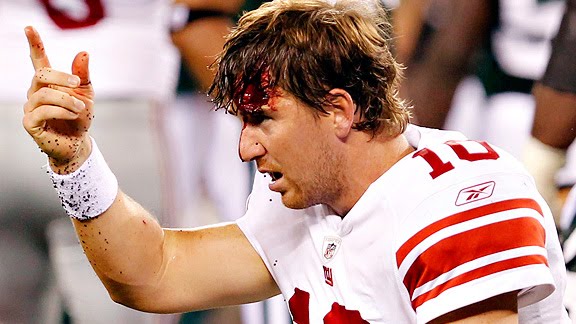
- Garçon, bring another Quarterback.
go with the color of blood.
Domestic or Imported? My gut reaction says buy American. But if one can drink an imported beer during the game, why not an imported wine? OK, maybe not French wine (apologies to T-Jef). See, I can compromise. Thus, I won’t turn up my nose at an import. But an American institution calls for an American wine– a Napa Cab, a Dry Creek Valley Zin, a Washington State or Oregon Pinot Noir. These are what I will be sipping.
But how to respond to the bold flavors of the Sunday Football Table? Follow the Lombardi/Shula leads– Grill some thick freakin’ steaks. Pile on some pomme frites–uh, French Fr– uh, — screw it, just nuke a potato. Put some brocoli on the plate, if you must and be a man about it! There’s blood being spilled on the gridiron. There should be blood on our plates. Keep your nachos! By the way, if you want that beer, go ahead. It will do just fine with the steaks.
That goes for you ladies as well– unless, you’re sipping some vintage Bollinger. In which case, I’ll see you at halftime.

- With Love from the City of Brotherly Love: A sandbox any of us would want to play in. Pass the Bubbly, please!
Like what you see? Hit the Subscribe/Follow button and don’t miss another Sybarite Sauvage post.

 The House of Ruffino is one of the best established names in wine in the world. Founded in the 1870’s by the Ruffino cousins, Ilario and Leopoldo, by 1913, lacking any male heirs to continue the business, they sold out to the Folonari family. Ruffino is a name that has become nearly synonymous with Chianti and the straw bottle cliché. That changed in the 1970’s as the traditional bottle was abandoned for a more modern (and patented) “Florentine” bottle.
The Modus Brand was introduced in 1997– a moment when Super Tuscans were very well established in the market place. A short history of the Super Tuscan:
In 1968 Azienda Agricola San Felice produced the first ever “Super Tuscan” called Vigorello, and in the 1970s Piero Antinori, whose family had been making wine for more than 600 years, also decided to make a richer wine by eliminating the white grapes from the Chianti blend, and instead adding Bordeaux varietals (namely, Cabernet Sauvignon and Merlot). He was inspired by a little-known (at the time) Cabernet Sauvignon made by relatives called Sassicaia, which openly flouted the rules set down for traditional wines in Tuscany. The result was one of the first Super Tuscans, which he named Tignanello, after the vineyard where the grapes were grown. Other winemakers started experimenting with Super Tuscan blends of their own shortly thereafter. Today, a Super Tuscan from a good producer can easily cost $100 plus. If you want to check out a more comprehensive history of the Super Tuscans, click on the link: http://www.intowine.com/italys-super-tuscan-wines-history-recommendations
 Ruffino Modus 2007 ($37).
 Modestly priced (by Super Tuscan standards) this blend of 50%Sangiovese, 25% Cabernet Sauvignon, and 25% Merlot, wine pours out in a dark robe. Earthy and leathery notes as well as dark bitter chocolate and espresso mixed with unripe black plum/blueberry flavors intermingle on the palate. While this wine had a long finish, I found its extraction heavy to distraction. Whatever the vinification manipulations employed, it appears that the character and freshness of the Sangiovese fruit was sacrificed to the more brooding flavors absorbed from the small oak barriques used in the aging of this wine. To quote Ms. R, “It’s good, but not for THAT price!” Given her economical style of expression, I should just let her write these reviews. Rated **
Like what you see? Click on the Follow/Subscribe button and don’t miss another Sybarite Sauvage post.

Last night’s dinner at Macelleria, a Manhattan based Italian steakhouse, though good in certain aspects, left some things to be desired. And when you are ponying up serious coin, there is little room for error.
Ms. R and I have been trying to get to this place for some time to take advantage of a promotional offer we had in hand. More on that shortly.
First, the good news. The restaurant space is wonderfully rustic, with upstairs and downstairs dining areas that evoke butcher shop chic.
Food: the beef is very good as one would expect from a place so named (Macelleria is the Italian word for butcher shop) and so located in Manhattan’s Meatpacking District. We shared a Porterhouse for two that could have served Fred, Barney and even left a bit for Dino to polish off. It was expertly prepared to medium rare and flavorful, though oddly, it arrived at our table in a pool of olive oil and, I presume, clarified butter. Next best was the Ribolita– a soup made with cannellini beans and kale.
A disappointment was the Garganelli with a slow-braised ox tail ragu sauce. The ox tail did what it was supposed to do– melt in your mouth. But the dish seemed to lack pop– being a little under-seasoned (better than over seasoned, I suppose) and it had a quality that I can only describe as “home-style”– some maimoni’s nana prepared this dish. But at $18 for the plate it should have been something a bit more special– it was not. Even though we ate all of it, I think I would have preferred nana’s version.
Service– arriving for a 7 pm reservation, we did have a choice of tables and the staff were very accommodating. But there seems to have been a little tension between our waiter and one of the hostesses. Without blaming anyone, because there is probably some history here, I think that is something that staff must ALWAYS strive to hide from customers. That aside, our waiter was friendly enough and took good care of our table, though I do not recall him asking whether the meal was to our liking.
Drinks– I am intentionally not reviewing the Brunello we had with dinner. But in the matter of the Moscato d’Asti that we were given to sample a couple of suggestions for the bartender: never serve a Moscato that has been opened for more than a day or two as it loses the effervescence of its frizzante quality. Also, never serve any drink in a broken glass– the Moscato came in a glass with a pinky-fingernail-sized chunk missing from the base.
As for the promotional offer– we informed the staff that we were taking advantage of the offer as soon as we were seated. When the bill arrived, the $50 discount had been overlooked. OK, mistakes happen. They took back the bill and manually subtracted $50 from the AFTER-tax amount. So part of my discount went to pay for sales tax that I should never have been charged. Too tired to argue the point and not wanting to spoil the fun that Ms. R and I were having, I let it go. But guys– this is poor form. You CAN DO BETTER. Hard to believe? How hard would it be to simply recalculate the bill on your computerized system? I would not normally post an image like this, but unless you see it for yourself…
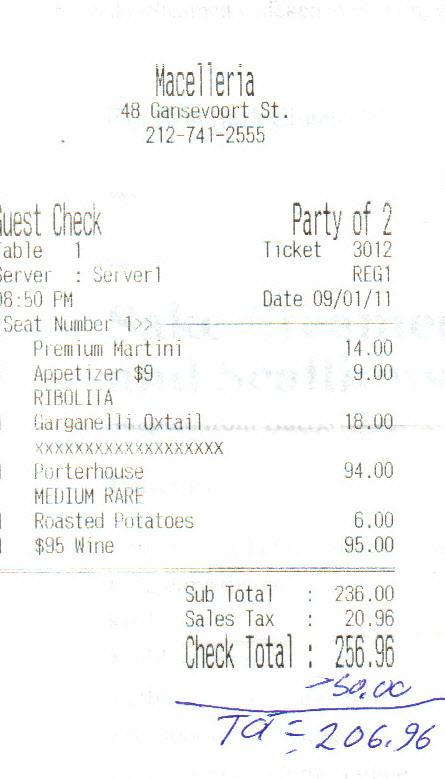
For a restaurant that has price tags that say it has higher aspirations, I think there is much work left to do.
Macelleria
48 Gansevoort Street
New York, NY 10014
 Like what you see? Click on the Follow/Subscribe button and don’t miss another Sybarite Sauvage post.

Goodnight, Irene
As the Tempest, Irene, rages outdoors, lashing us with wind and water, I sit here clearing the fog in my head with a hot teapot of English B this Sunday morning, hoping that my electricity and therefore my internet access will not abate. It also brings to mind the relationship between water and wine.
 From the events described by St. John at the Wedding at Canaan, to the actual mixing at table of wine and water as Thomas Jefferson seems to have done with what he described as vin ordinaire (say it ain’t so, T-Jef!), to the bigger no-no of putting ice cubes in wine, I didn’t think there was much more to say about this subject.
Till this hit my radar– forget about putting water in wine, how about putting wine in (salt) water. This is exactly what Piero Lugano, a wine merchant and producer, in Chiavari, Italy (in northwestern Italy near Genova), has done. Having no room to bottle ferment his sparkling wines somehow received permission from Italian bureaucrats to store them under water off the coast– a modern day miracle if you ask me. According to a New York Times report, the gentle currents in these waters actually keep the lees moving continuously through the wine and results is a beautiful spumante, by the looks of it on the videos. Apparently the water temperature is also perfect for this task. And when the wines emerge from the sea, the bottles, not surprisingly, are covered with sea creatures: http://www.youtube.com/watch?v=9ZIopxqznXU


The Bisson “Abissi” 2009 vintage was pulled from the depths in July and hopefully might be available in the US sometime this fall. Maybe this is just a gimmick to sell wine, but count me in.
Though their saber cut technique leaves a lot to be desired, if you want to see how Italian Fancy Boys enjoy their Abissi check out this short clip: http://www.youtube.com/watch?v=eyNEvQ6ZO0c
The original NYT article can be found here: http://www.nytimes.com/2011/08/24/dining/underwater-sparkling-wine.html?_r=1&sq=abissi&st=cse&scp=1&pagewanted=print
Like what you see? Hit the Subscribe/Follow button and don’t miss another Sybarite Sauvage post.

Some days you simply need to blow off a little steam. Today was one of those days. I awoke early this morning with a headache and a dread for a task I had to deal with first thing. By the time I got to work, I was spent.
What to do on an otherwise magical day with ethereal blue skies with patches of O’Keeffean clouds? Simple: I am blessed with two buddies that love wine and hijinks almost as much as I do. We decided to take an extra long lunch to have a meal with a special Syrah that we jointly acquired some months ago. Of course, one bottle could not do on such a beautiful day and before we knew it– oops!– a second one had been opened.
The meal itself, served al fresco on my deck, was a simple fare from a local Italian restaurant– pizza, penne ala vodka, garlic knots– yes, we had the starches covered– but there was even a touch of salad. We spent a couple of agreeable hours in each others’ company laughing at ourselves, discussing religion, life and work. And of course, there was some eating and drinking to accompany the repartee.
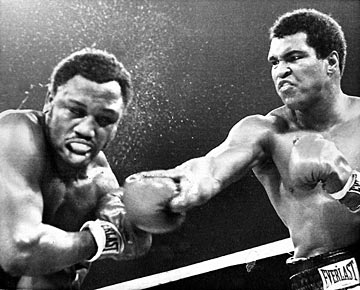
These two wines brought to mind the great battles between Muhammad Ali and Joe Frazier. The latter, a little slower but with frightening power and coming at you from the moment the first round bell sounds. The former, with speed, agility and enough power to make you think twice before getting too close. Not that this ever stopped Joe Frazier.

Sequel Cellars Syrah 2005. From Washington state, this wine is 96% Syrah and 4% Cabernet Sauvignon, aged for 16 months in mostly French oak and had 14.7% alcohol. Almost black, this wine was– I was expecting to be blown away by an overly extracted wine. Blown away, yes, but by its finesse as well as its power. This Old World style wine was initially a little tight, but 10 minutes in the decanter changed that. It alternated amongst scents and flavors of tea, herbs, dark fruit including blackberry and black cherry, underbrush, bacon and vanilla. As it opened up, it reminded me of velvet robe sliding off a bare shoulder and onto the floor– all in slow motion– revealing unspoiled flesh… and perhaps a tramp stamp. It finished with an enveloping sensuality balanced by soft tannins and acidity. If it had a fault, and here I am being very picky, it is that I wished the finish were just a tad longer. But this is a minor quibble. Rated *** 1/2
 Adelaida Glenrose Vineyard Reserve Syrah 2007. From Paso Robles, CA, this one had simply gorgeous ripe fruit. Right out of the bottle, this wine whispered, “Drink me, I’m here just for you.” Yes, I really want to believe that. I’m here for you too. Although sweeter than the Sequel, this wine had a enough acidity and tannin to balance the dark fruit core. However, at 15.5% it lacked the finesse that I would have liked. Yes, it carries a big punch, but without the agility and complexity of the Sequel. Still, I’m here for you. Although my buddies both preferred this to the Sequel, all I could see was poor Joe Frazier losing another one. That sort of disagreement is part of the beauty of drinking good wine with great friends. Great friends or no, this isn’t a democracy around here and so, I get to issue the final rating. Rated ***
 Sella & Mosca Cannonau di Sardegna Riserva 2007 ($11).
 This is one of those bottles that convince us that you don’t need to part with a galleon (or even a BMW) filled with coin of the realm to get a truly interesting and tasty treat. It was tasted over two nights and the second night even better. Initially, on the nose I was surprised by a scent of nutmeg-like aromas intermingled aromas of wine aging room (oak barrels mixed with spilt wine). Finishing with medium tannin and soft acidity, the stuffing in between was a pleasing combination of black plum and cherry baked in a more savory than sweet wrapper. The producer’s website offers that the Cannonau is oak aged for two years in large Slavonian casks with several additional months in the bottle. This is the first wine that I have had from Sardinia and it has a strong sense of place. If you find this try it for the distinctiveness it offers. A very food-friendly wine. Rated ** 1/2
What is Cannonau? As I sipped at this, I was thrown by the bouquet. Is this the first time I have tasted Cannonau? Better known in Spain, the land of its origin, as Garnacha and in France as Grenache, I think I may have come across it on one or two (hundred) other occasions. But never like this and this is one of those surprises that just keeps the intrigue alive for me as a wine drinker.
And speaking of food, the first night we had this, it was paired with a pasta served with a tomato based meat/mushroom sauce. It was serviceable. But that was just like the soprano clearing her throat before the big aria. On the second night the sweetheart of a wine soared with a grilled tilapia in a white wine-butter-caper sauce. I can’t explain the chemistry of why this would work better with a white fish than a pasta dish, or why I would even try this with grilled fish. All I know is that sometimes you take a chance on something and the result you get is greater of than the mere sum of the parts.
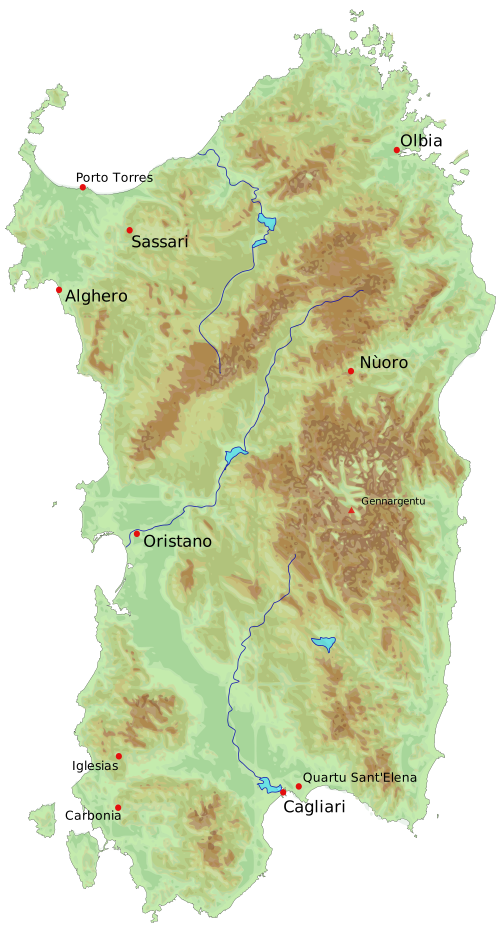
The island of Sardinia (a part of Italy) is located off the western coast of Italy. Sella & Mosca’s I Piani estate in Sardinia constitutes one of the largest contiguous vineyards in Italy and is situated in the northwest corner of Sardinia, just inland from the historic port of Alghero.
The wild-caught Sockeye Salmon looks very good in the markets at this time. Last night I prepared it as a late al fresco supper for ourselves. The preparation is relatively simple: seasoned with salt and pepper and pan-seared over high heat in a touch of peanut oil. Once seared I poured a simple teriyaki sauce over the salmon and cooked it a while longer till the sauce glazed the salmon. I served the salmon over a bed of sautéed vegetables found in my refrigerator: haricot vert and thinly sliced fennel and green onion.
By the time dinner made it outside, Ms. R had lit up the deck with all manner of tealights and candelabra. We sat there to the envy of the neighborhood. Explain to me why I should ever go out to eat again. It gets harder and harder to justify.
The fennel worked in counterpoint to the salmon in a very complementary manner.
 Kokomo Peter’s Vineyard Pinot Noir 2008. What else could we drink with this salmon dish? Translucent red juice with gorgeous red fruits– raspberry, cranberry and a little something more. Acidity to offset the sweetness of the teriyaki glaze on the sockeye. All of it wrapping my tongue in a silky red robe. Joy in a bottle. Rated ***
Pan-Seared Teriyaki-Glazed Salmon
Ingredients:
For the Teriyaki Glaze:
- 1 tsp. peanut oil
- 1 garlic clove minced and mashed with the side of a knife into a paste
- 1 tsp. freshly grated ginger
- 1/4 cup Ponzu (citrus flavored soy sauce)
- 1/8 cup rice vinegar
- 1/4 cup Mirin (sweetened sake)
- 2 tbsps. honey
For the Salmon:
- 1 lb. of fresh sockeye salmon cut into 1/2 lb. pieces
- 2 tsps. of peanut oil
- salt and pepper to taste
Steps:
- In a saucepan, heat up 1 tsp. of peanut oil and saute the garlic and ginger without out burning
- Add the Ponzu, Rice Vinegar and Mirin and bring to a boil– reduce heat to a low simmer. Add Honey and stir to dissolve.
- Taste and adjust the sweetness/acidity to your liking by adding more of one of the 4 ingredients in step 2
- Reduce the sauce by about one-quarter
- While the sauce is reducing, saute the salmon skin side up in the remaining 2 tsps. of peanut oil. After the salmon has browned (about 3-5 minutes), turn it over carefully with a spatula so as not to break it apart. Cook for another 3 minutes.
- Turn down the heat to low and pour the hot teriyaki sauce over the salmon shaking the frying pan to prevent the sauce from burning which it will do if you’re not careful. At this point, you want the sauce to turn into a glaze so do not turn you back on the stove as you will go from glaze to burned dinner in an instant.
- After the sauce reduces further into a glaze, plate the salmon over the vegetables
Serves 2.
© Sybarite Sauvage
Sautéed Fennel, Green Onion and Haricot Vert
Ingredients:
- 2 tbsps. of peanut oil
- 2 cups haricot vert (French green beans)
- 1 fennel bulb thinly sliced
- 4 green onions (scallions) thinly sliced diagonally
Steps:
- Heat up the oil in a hot wok
- Add Fennel and Green Onion and stir fry for one minute
- Add the haricot vert and season with salt and pepper
- Continue stir frying until done
- Remove to serving platter/dinner plates
Serves 2.
© Sybarite Sauvage





 sybaritesauvage